





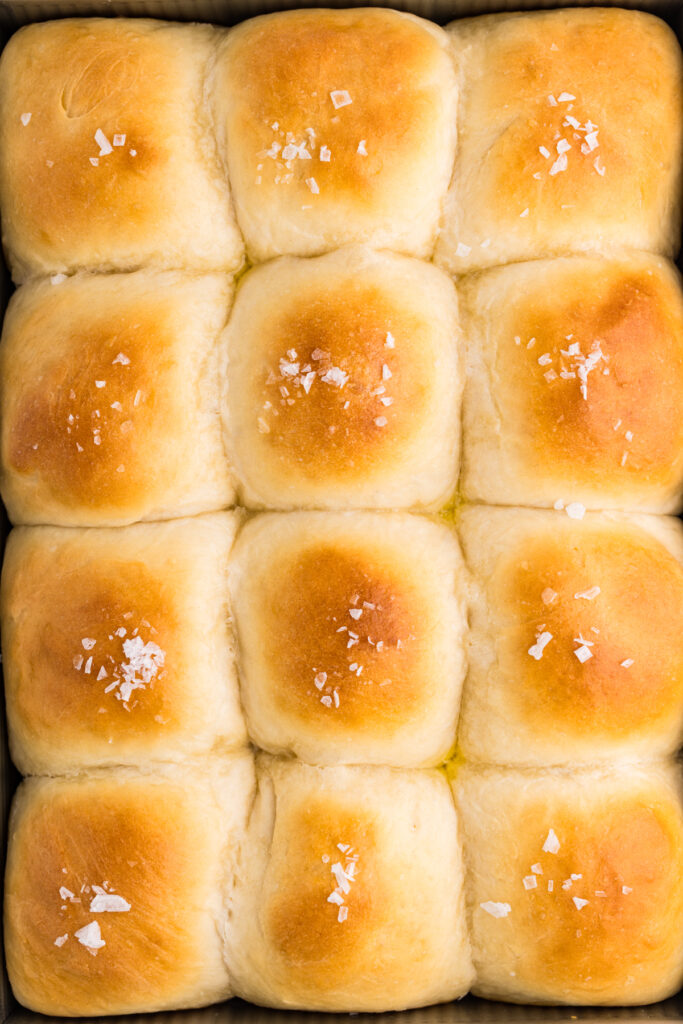
Soft, fluffy, and a little pillowy. These potato rolls disappear from the breadbasket first, and they’re way easier than they look.
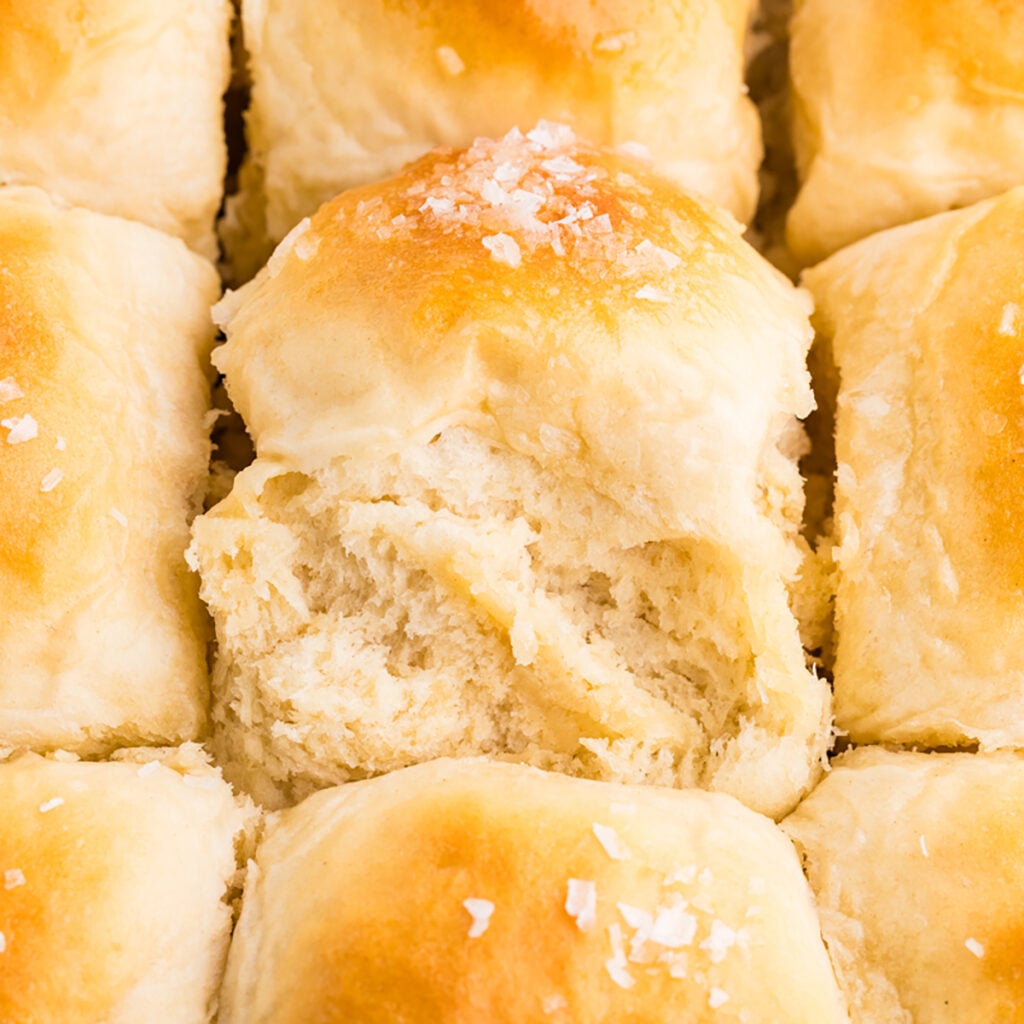
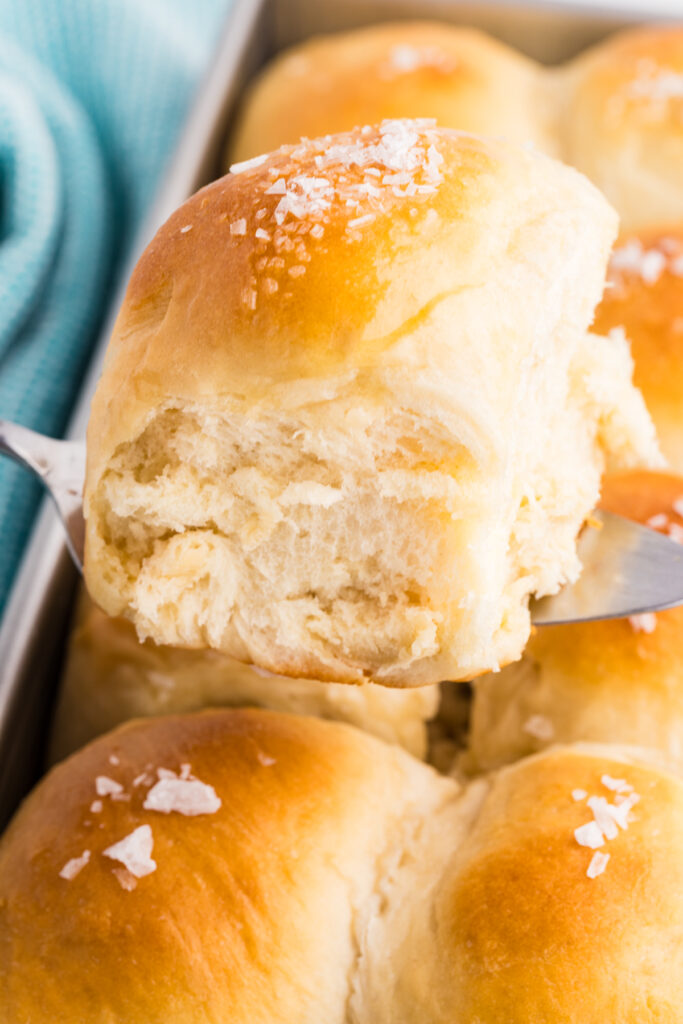
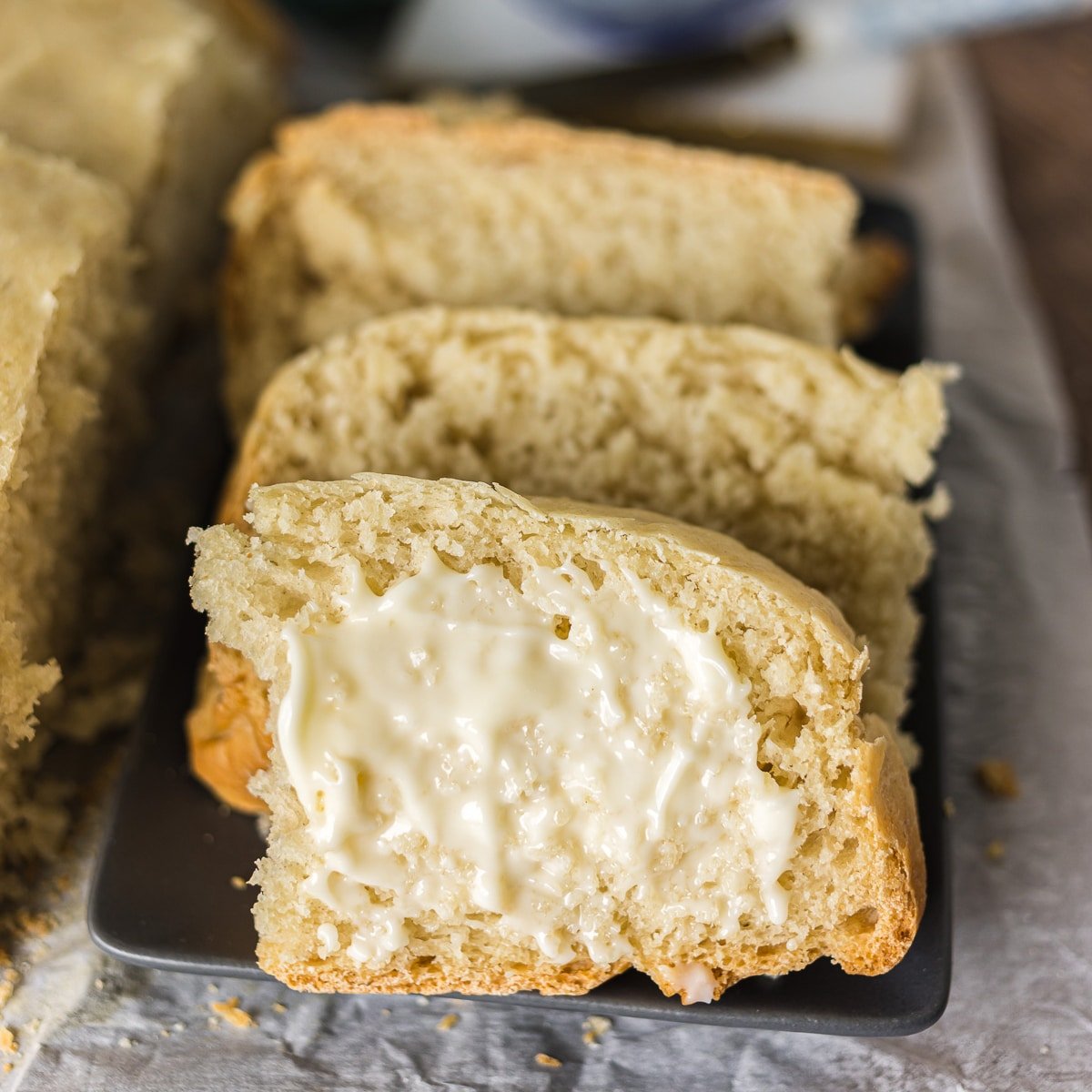
These potato rolls might just be the most fluffy dinner rolls you’ve ever had! They’re soft, fluffy, moist, and have that slight sweetness similar to Hawaiian rolls.
What makes potato dinner rolls different from any other roll? The potatoes. They add moisture and starch that keep the inside tender for days instead of the usual one. And the easiest way to get that potato magic without peeling, boiling, or ricing anything is potato flakes.
Yep, the same instant mashed potato flakes you’d grab for a quick side dish go straight into the dough. They rehydrate in the warm milk and butter, and the result is a roll that’s softer and stays soft longer than a standard yeasted version. No actual potato peeling required.
The dough is a little sticky and asks for two rises, but the active hands-on time is honestly small.
After testing multiple times to get the perfect flour ratio, these homemade rolls turn out just right every time. So, regardless of your baking experience, learning to make homemade rolls has never been so easy!
Fluffy Homemade Potato Rolls
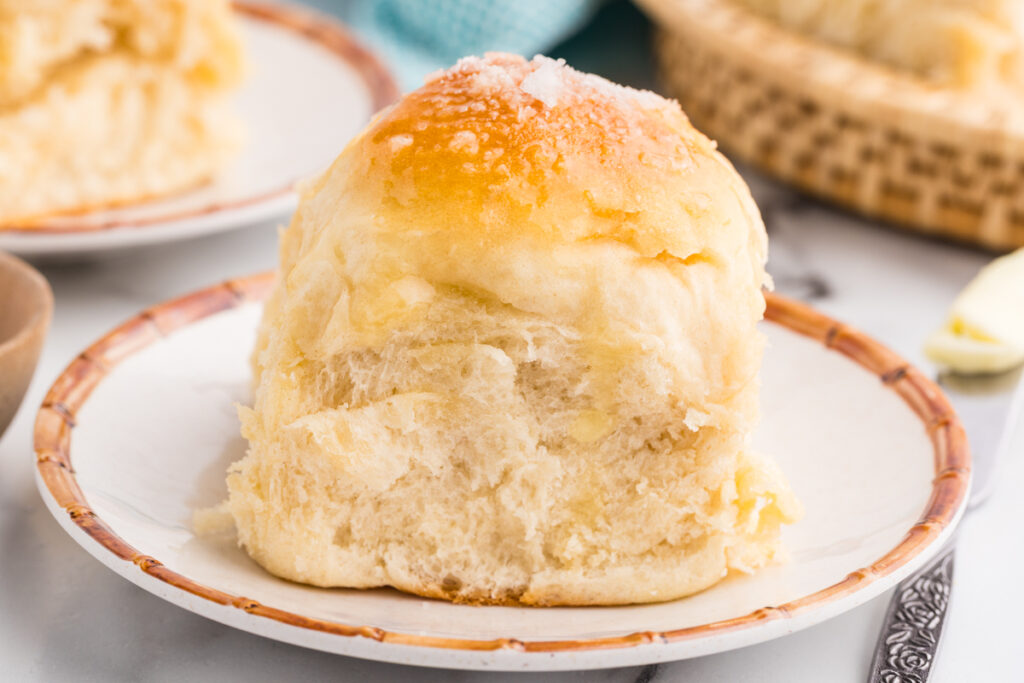
Why you’ll love this recipe
- Fluffy and soft, rich and buttery, and bake up beautifully!
- Made with boxed potato flakes and other simple ingredients.
- Perfect for holidays (looking at you, Thanksgiving), family dinners, or everyday meals.
- Enjoy them as a side, a snack, or a slider!
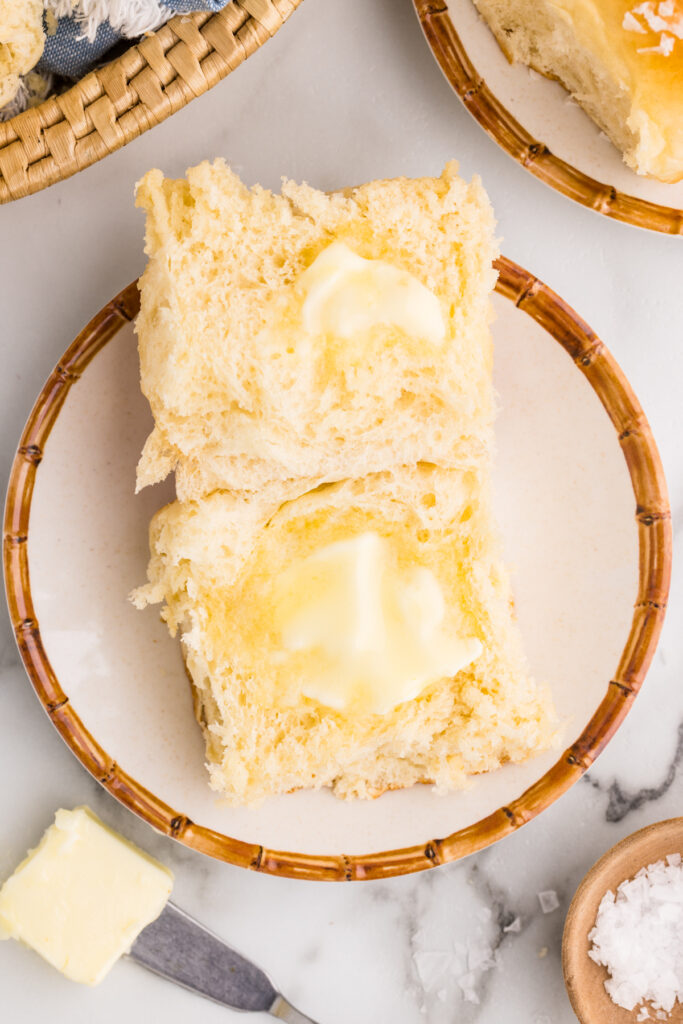
Helpful Tools
- Stand Mixer – The dough pulls a lot of flour and gets sticky. A stand mixer with the paddle attachment makes this mostly hands-off. A hand mixer plus a sturdy spoon works too.
- Measuring cups – I’ve found myself reaching for these silicone measuring cups every time I bake lately.
- 9×13 baking dish – Bakes the rolls right up against each other so they pull apart soft on the sides.
- Pastry brush – For the melted butter at the end. I feel like its easier to clean the silicone version than a regular brush. A spoon and a tilted dish also works in a pinch.
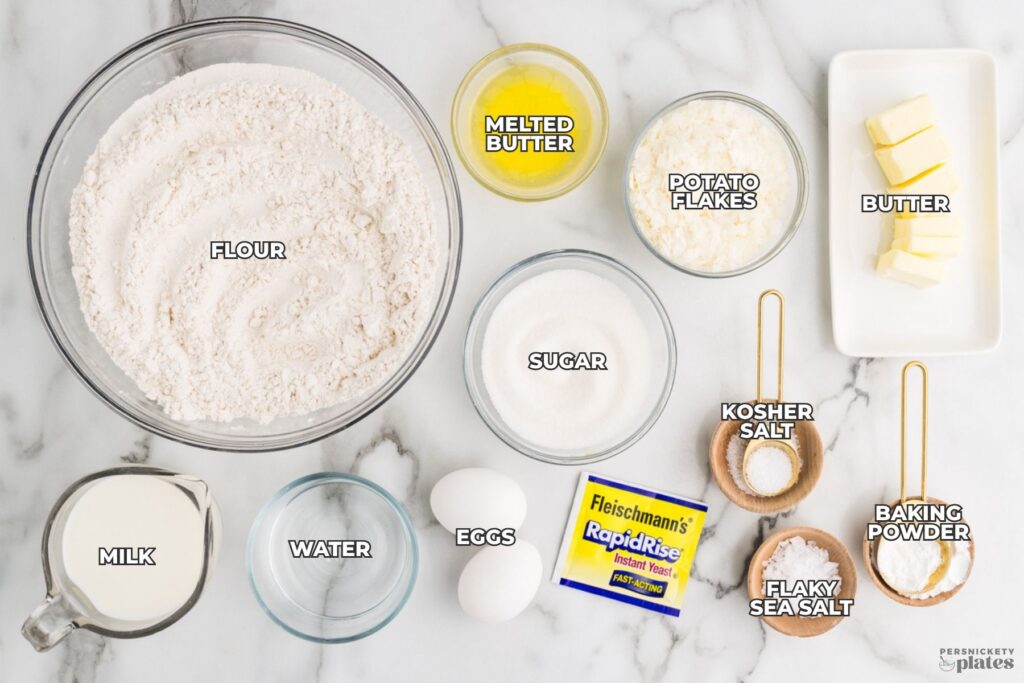
Ingredients for Potato Dinner Rolls
Below is a list of the ingredients you’ll need to gather to make this recipe, why you need them, and possible substitutions. Scroll all the way down for the full recipe card with measurements.
Jump- Milk: I use 2% for richness. You can also use whole milk. You scald it first, which deactivates a protein in the milk that can mess with the rise.
- Warm water, Instant Yeast, Granulated white sugar: Water needs to be warmed to 105°F-115°F to proof the yeast without killing it. Active dry yeast can also be used, just give it a few more minutes to bloom. The sugar feeds the yeast and is also used in the dough for tenderness and a hint of sweet.
- Salted butter: Softened to room temperature so it creams easier when blended into the dough.
- Potato flakes: I use Bob’s Red Mill, but you can use whichever brand you prefer, just make sure you use instant mashed potato flakes (no butter, no milk solids, no flavoring added). This is the whole secret to that pillowy texture.
- Baking staples: Baking powder to work with the yeast, kosher salt for balance, large eggs for richness and structure, and all-purpose flour. The baking powder adds extra lift and shortens the rise time. Here’s how to measure flour without a kitchen scale.
- Topping: Salted butter and flaky sea salt. Highly encouraged.
How to make Potato Dinner Rolls Recipe
This section shows you how to make this recipe, with process photos showing the steps to help you visualize it. For full instructions, including amounts and temperatures, see the recipe card below.
Jump- Step One: Scald the milk over medium-low heat until small bubbles form on the edges. Do not let it come to a boil! Remove from the heat and let it cool to about 120°F
- Step Two: In a measuring cup, mix warm water, yeast, and a bit of sugar. Let it sit 5–10 minutes until its frothy and smells like bread.
- Step Three: In a large bowl or the bowl of a stand mixer fitted with the paddle attachment, mix the sugar, softened butter, potato flakes, baking powder, and salt. Then, add the cooled milk, yeast mixture, and eggs. Continue mixing until combined.
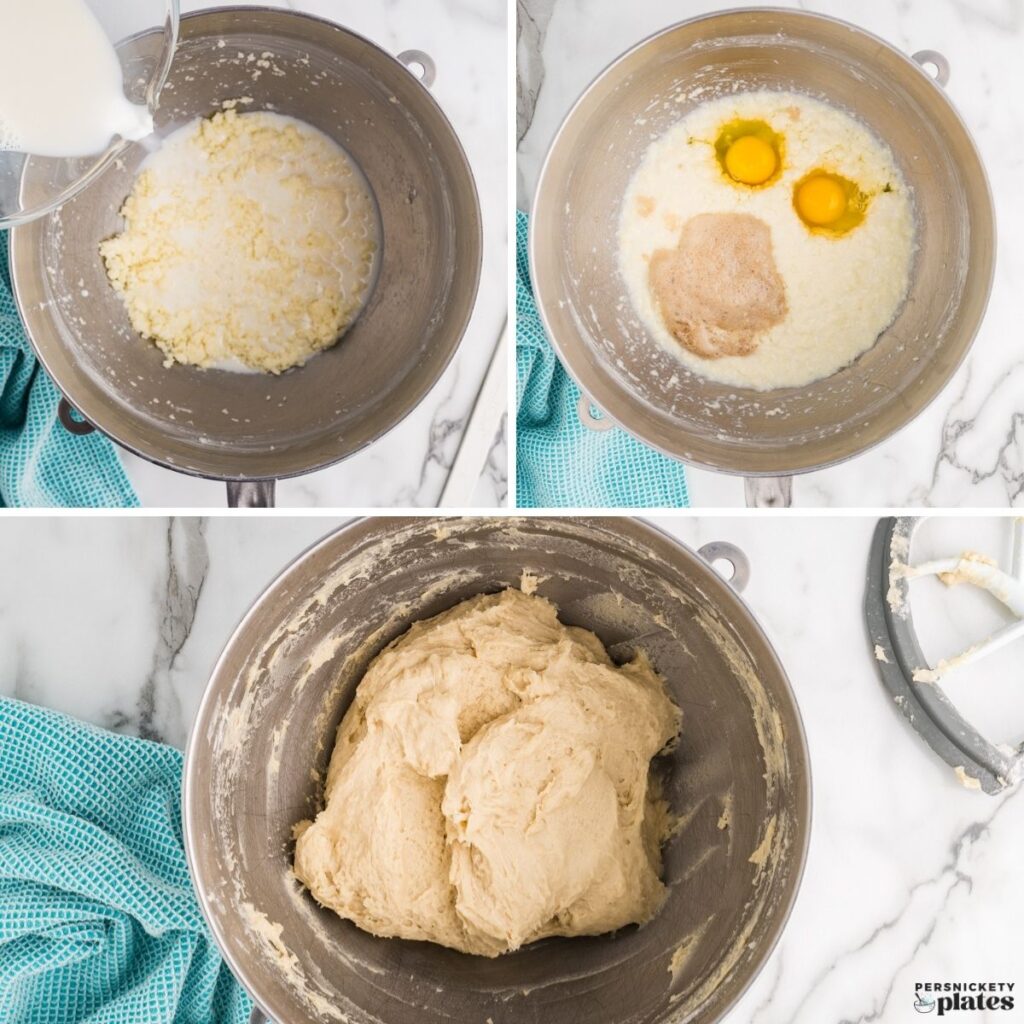
- Step Four: Gradually add flour until a soft, slightly sticky dough forms and pulls away from the sides of the bowl. It’s sticky but shouldn’t coat your hands like glue. Cover with a kitchen towel and let it rise in a warm place for about 1 hour until it doubles in bulk.
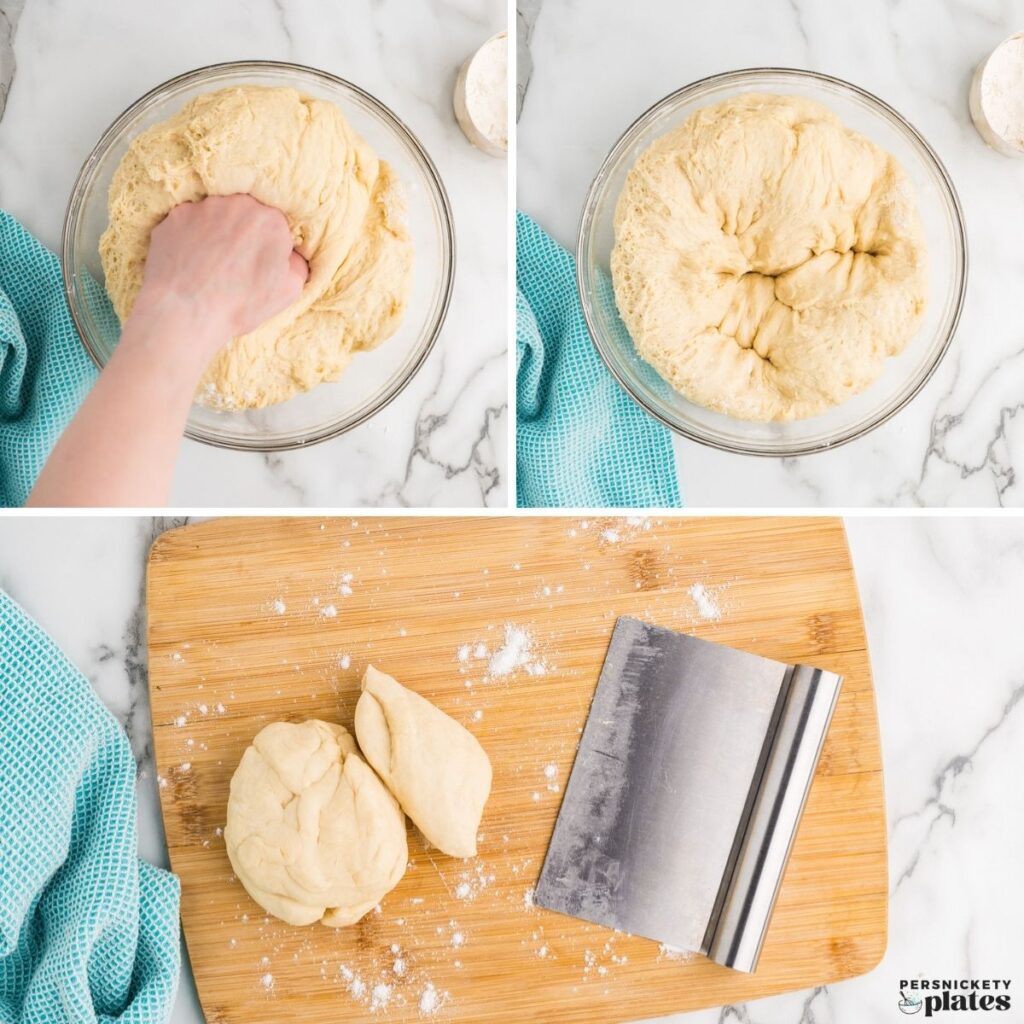
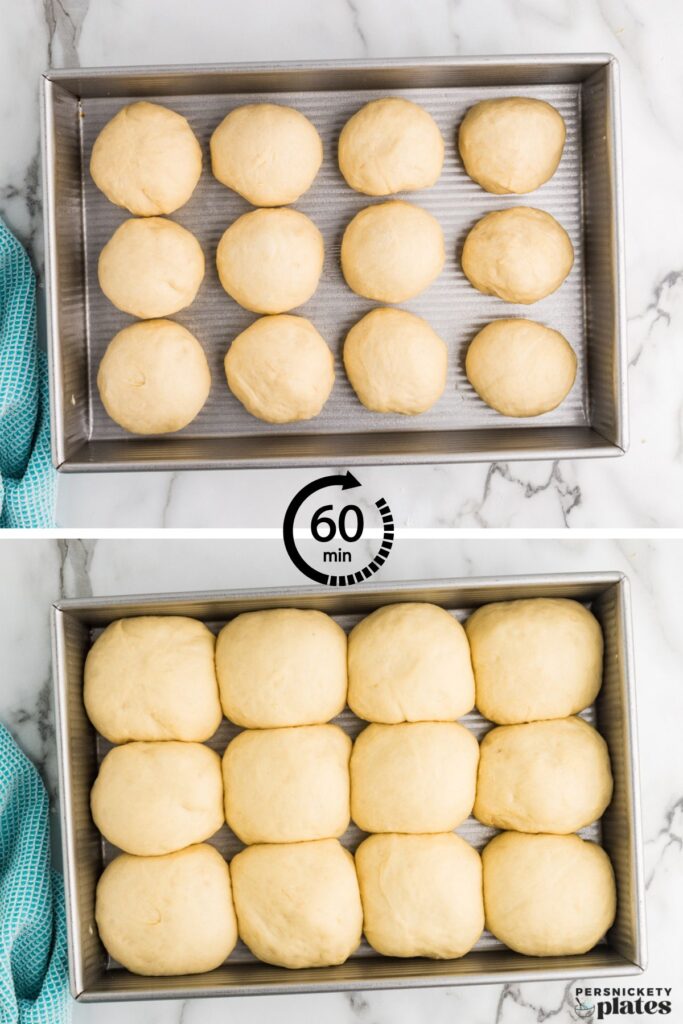
- Step Five: Punch down the dough, divide it into 12 balls (15, if you want midsized rolls), and place them in a greased 9×13 baking dish. Cover once more and let it rise for another 1 hour.
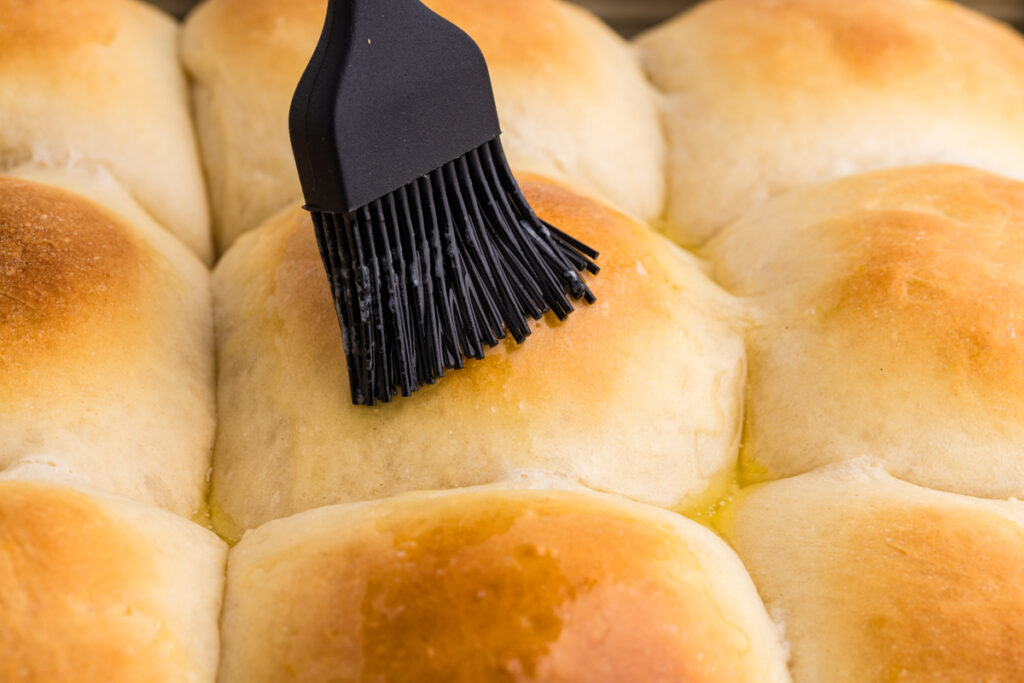
- Step Six: Bake in a preheated 350°F oven for 20-25 minutes until golden brown. Brush the tops with melted butter and sprinkle with flaky sea salt before serving.
How to serve it
There’s nothing better than a warm, pillowy dinner roll served alongside a cozy dinner like slow cooker pot roast or slow cooker beef stew.
We also love them with hot soups like chicken noodle soup and crockpot stuffed pepper soup to mop up every drop of broth in the bowl.
You could turn slow cooker beef and cheddar sandwiches, Italian chicken meatball subs, and slow cooker sloppy Joes into sliders using this potato dinner rolls recipe.
I also threw a fried egg on a couple and made a breakfast sandwich!
- Find a warm spot for the rise. If your oven has a “proof” setting, use it. If not, warm your oven for a few minutes, turn it off, crack the door, and tuck the bowl inside. The dough wants 70-100°F.
- Start low on the flour. I tested this dough at 3½ cups and at the full 4¼, and the potato flake version really does need every bit of 4¼ to come together. But add it gradually. You can always add more, you can’t take it back out.
- Don’t skip the scald. The first time I made these I used cold milk straight from the fridge to save time. The rise was sluggish and the texture was tighter. Five minutes of scalding makes a real difference. Do not overheat the milk. It should be scalding but not boiling, otherwise it may affect the yeast.
- Always check your yeast. If it’s expired, discard it and grab a fresh packet. You’ll know if it doesn’t foam during activation.
- Don’t skip the second rise. This is what ensures they’re nice and puffy before baking.
- The flaky sea salt is doing real work. It plays off the soft, slightly sweet roll and makes the tops feel finished. Maldon if you have it, any flaky finishing salt if you don’t.
Storage & Leftovers
How to store leftovers
Store potato dinner rolls at room temperature for up to 4 days. Keep them covered, airtight, to prevent them from drying out. Don’t refrigerate – the fridge dries them out faster than the counter does.
Freezing Instructions
Wrap individually or layer in a freezer safe container with parchment between layers. They keep for up to 3 months. Thaw at room temperature and warm in a 300°F oven for a few minutes to bring back the soft texture.
Reheating Instructions
These are just as tasty at room temperature, but if you want to soften them up a bit, you can warm them in the microwave for 15-20 seconds.
FAQs
Potato flakes give you the same pillowy, moist texture without peeling, boiling, and mashing actual potatoes. They also keep the moisture more consistent (mashed potatoes vary in water content depending on the spud), which makes the dough easier to predict. Same benefit, way less work.
Plain instant mashed potato flakes. Not the boxed kind with butter, milk solids, or seasoning added. Those bring extras you can’t measure and they’ll throw off the dough. I grab Bob’s Red Mill, but any plain unsweetened, unflavored brand works.
You can. After the first rise, punch down the dough, shape into balls in your buttered 9×13 dish, cover tightly, and refrigerate overnight. Pull it out 1-2 hours before baking to come back to room temperature and finish the second rise.
Need more fluffy roll recipes? Try these:
Copycat Texas Roadhouse Rolls Recipe
Click here to view my entire collection of bread, biscuit, and roll recipes.
Potato Dinner Rolls
Ingredients
- 1½ cups milk I use 2%
- ¼ cup warm water 105-115°F
- 1 packet (7 g) instant yeast
- 6 Tablespoons (75 g) granulated white sugar divided
- 6 Tablesoons (85 g) salted butter softened to room temperature
- ⅔ cups (31 g) potato flakes I use Bob's Red Mill
- 1 Tablespoon (14 g) baking powder
- 1 teaspoon (5 g) kosher salt
- 2 large eggs
- 4¼ cups (510 g) all purpose flour
- 2 Tablespoons salted butter melted, optional
- flaky sea salt
Instructions
- In a small saucepan over medium-low heat, scald the milk. When little bubbles start to form on the outer edge, remove the pan from the heat. Do not boil it. Set the pan aside and let the milk cool to around 120°F.1½ cups milk
- In a measuring cup, add the warm water, yeast packet, and 2 Tablespoons of the sugar (30g). Stir together and then let it stand for 5-10 minutes or until it gets frothy.¼ cup warm water, 1 packet instant yeast, 2.04 Tablespoons granulated white sugar
- In the bowl of a stand mixer fitted with the paddle attachment, or a large mixing bowl with a hand mixer, add the remaining sugar (4 Tablespoons/60g), softened butter, potato flakes, baking powder, and salt. Mix together on medium until fully incorporated.3.96 Tablespoons granulated white sugar, 6 Tablesoons salted butter, ⅔ cups potato flakes, 1 Tablespoon baking powder, 1 teaspoon kosher salt
- Pour in the cooled scalded milk (around 120°F) and mix. Pour in the yeast mixture and eggs and mix until fully combined.2 large eggs
- One scoop at a time, add in the flour until the dough starts to form into a ball and pulls away from the sides of the bowl. It is a sticky dough but should be manageable. I need the full 4¼ cups of flour. You may need less.4¼ cups all purpose flour
- Cover the bowl with a towel and let it rise in a warm place for about an hour. The dough should double in size.
- Butter or spray a 9×13 baking dish with non-stick spray.
- Once doubled, lightly flour your hands and punch the dough down. Divide the dough into 12 equal balls, smoothing between the palms of your hands, and placing into the prepared baking dish.
- Cover the dish with a towel and let rise again, in a warm area, for an hour.
- Preheat the oven to 350°F.
- Once risen, bake the rolls for 20-25 minutes or until golden brown.
- Remove from the oven, immediately brush with melted butter and sprinkle flaky sea salt on the top of each.2 Tablespoons salted butter, flaky sea salt
Notes
- I use 2% milk. Whole milk can be used.
- Start with 3 1/2 cups of flour and add more, up to 4 1/4 cups, or until the dough pulls away from the bowl, forms a ball, and isn’t overly sticky.
- As written, it makes 12 large rolls. Dough can be divided into 15 balls for smaller rolls.
- If your oven has a ‘proof’ setting, use that. The dough needs a warm place to rise (approximately 70-100°F). I generally warm my oven up then turn it off & leave it cracked open for proofing.
- Store leftovers covered at room temperature for 2-4 days. Do not store in the fridge.
- To freeze, place in a freezer safe container for up to 3 months.
Nutrition
Nutritional information is an estimate and provided to you as a courtesy. You should calculate the nutritional information with the actual ingredients used in your recipe using your preferred nutrition calculator.
Did you make this recipe?
Tag me on Instagram @melissa_pplates so I can see!Did You Make This?
If you made this recipe, I’d love to know how it went in the comments section below.
You can also tag me on Instagram – @melissa_ppplates or share a pic in the Persnickety Plates Community Facebook group. I love seeing what you’ve tried!













These rolls look and sound wonderful! I’ve never loved making rolls, but I plan to try these. I do think you’ve made a mistake at the beginning of the recipe in the 20 hours preparation and a 20 hours cook time.
whoops, thanks for the catch! 20 mins, not hours 🙂 I fixed it.
Aloha! Always wanted to try Potato Rolls. I’m a bit confused by the Prep, Cook and Total time that’s listed in the recipe. Could it be a misprint or am I missing something? Mahalo.
I fixed it! I just hit hours instead of minutes 🤦🏻♀️